Ataur Rahman Hamidi is a unique name in the world of Islamic nasheeds. In his voice, one can hear love, humility, and the resonance of dawah (invitation to Islam) towards Allah and the Prophet ﷺ. From being a nasheed artist to a video director, he inspires the younger generation in both roles. His continuous effort to spread Allah’s love through art has earned him the title of “Nasheed King” and the heartfelt prayers of countless listeners. Interviewed by: Sakibul Hasan
Did you ever imagine as a child that you would one day become an Islamic music artist?
Actually, I never dreamed of this as a child, but I always felt a special attraction to Islamic music. When I heard nasheeds being sung in the village mosque or madrasa, it felt like there was a certain peace in those words and melodies. Gradually, that love became an integral part of my life. By the grace of Allah, today people recognize me as an Islamic nasheed artist — for me, this is not just an achievement, but a trust (amanah) that I see as a means of dawah.
How did your interest in Islamic music develop?
My interest in Islamic music began at a very young age when I first saw a brother singing a nasheed at a madrasa event. Even without any musical instruments, his voice carried such spirituality that it left a deep impression on me. From that moment, I thought, “If only I could one day praise Allah and the Prophet ﷺ in this way!” That thought gradually turned into inspiration, and nasheeds became an inseparable part of my life.
Was anyone in your family involved in music?
No one in my family was directly involved in music, but there was a deep devotion to religion and recitation of the Quran. I grew up surrounded by Quran recitation, prayers, and Islamic gatherings. Perhaps this environment naturally drew me towards Islamic art.
What was the first nasheed you sang, and how was it received?
My first nasheed was “Prabhu Tumi Mohiyan.” It remains an unforgettable work in my life. It was recorded very simply with limited resources, but the love and encouragement people showed after its release exceeded my imagination. Many said that listening to it brought peace to their hearts and tears to their eyes. At that moment, I realized that this path is not just about music — it’s a beautiful way to invite people to Allah’s path.
You are called the “Nasheed King” in the Islamic music world. What does this recognition mean to you?
Alhamdulillah, when people call me “Nasheed King,” I see it not as glory but as responsibility. This title is not mine alone — it is the result of the prayers and love of those inspired by my nasheeds. I believe an artist is not only responsible for entertainment but also for creating a positive impact in society. So, this recognition reminds me to always stay true, working for Islamic thought and the purpose of dawah.
How are you making Islamic music appealing to the younger generation?
I incorporate modern visuals and sounds into my nasheeds while maintaining Islamic principles. My goal is for young people to feel inspired and spiritually awakened while enjoying the music.
What was the journey like from singer to video director?
I started with no experience at all. But my desire to present my work beautifully led me to video directing. As I learned, I fell in love with it, and now it has become a passion, alhamdulillah.
Which project did you find most challenging, and why?
My most challenging and emotional project was “Amar Nabijer Naam.” This nasheed was guided by my beloved mentor, Qazi Mashkur Elahi, who is my inspiration and guide. Because of him, people recognize the name “Ataur Rahman Hamidi” today. This work carried responsibility, love, and respect, so it holds a special place in my heart.
You have received awards for “Best Nasheed Artist of the Year” and “Best Video Director.” How have these influenced your career?
Alhamdulillah, these recognitions are great motivation. They made me realize that people are not just listening but feeling. Now, I strive to be more responsible and sincere in every work.
What changes would you like to bring to the Islamic music and video industry in the future?
I want Islamic music to be presented in a more modern way, attracting young people while staying within Islamic principles. Through high-quality production, clear messages, and beautiful visuals, I hope to take nasheeds to the international stage, Insha’Allah.
As a director, what message do you want your audience to take away?
I want every video I direct to help people feel love for Allah and His Prophet ﷺ. Alongside entertainment, I want to light the lamp of morality and faith in hearts — this is my main message.
Lastly, I greatly enjoy working with Qazi Mashkur Elahi’s team. Everyone in our team — Abdul Mannan Miazi, Enam Bin Said, Anas Abdullah, and my friend Saifullah Bin Mahmud — is very cooperative and sincere. Another close friend, Saaduzzaman Noor, has collaborated with me on many duets.
News Published By:
Bangladesh Diary

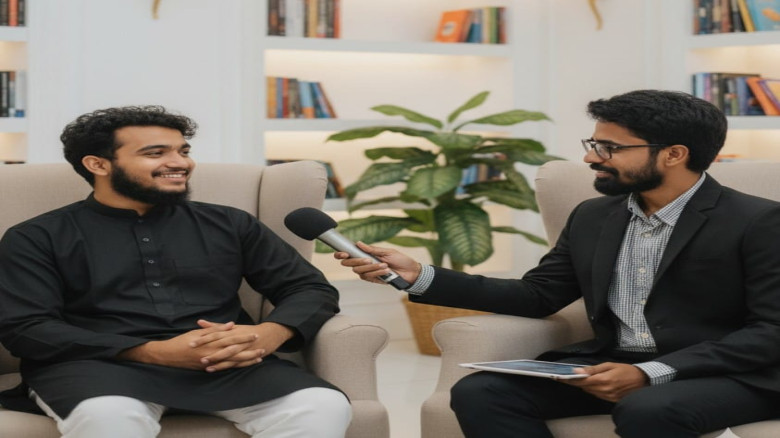 Photo: .